Notre-Dame de Paris
Notre-Dame de Paris in France Tours
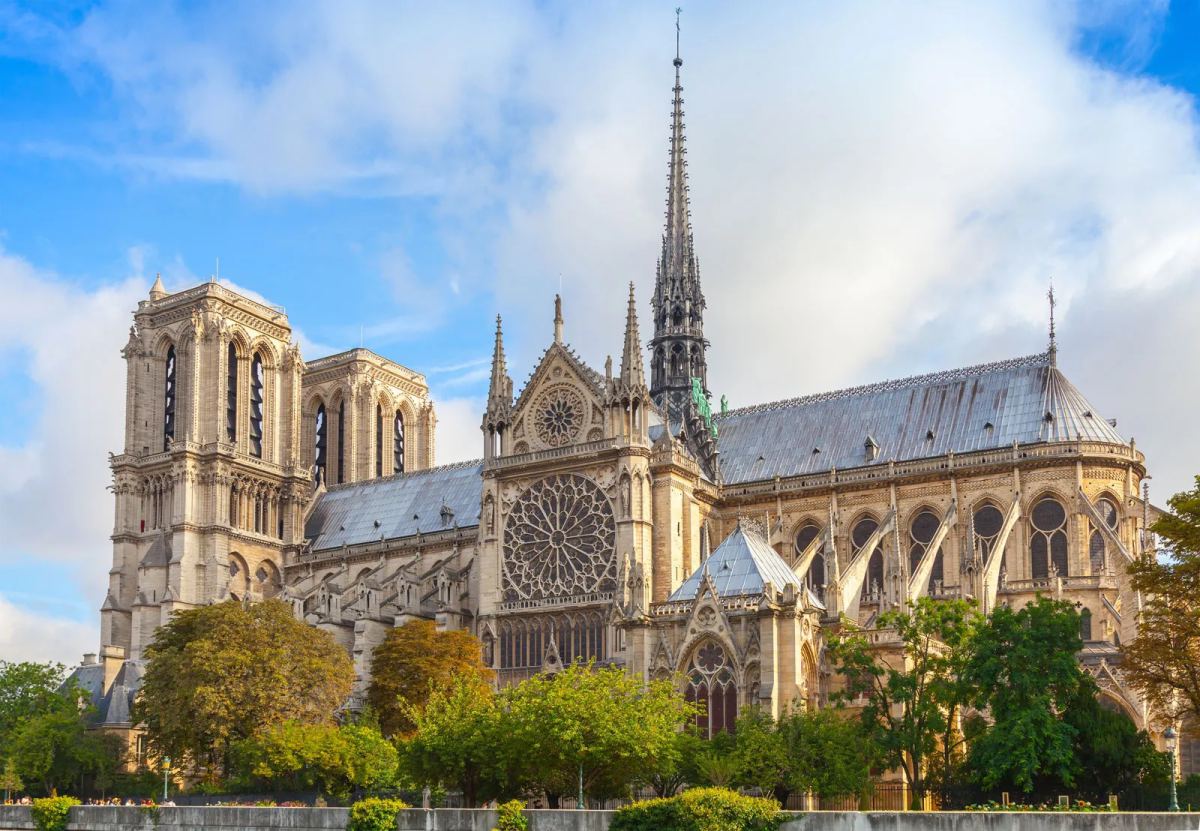
Notre-Dame de Paris is one of France’s most celebrated Gothic masterpieces and a major symbol of Paris. Located on the Île de la Cité, the cathedral’s construction began in 1163 under Bishop Maurice de Sully and continued for around two centuries. Its architecture is renowned for its soaring proportions, ribbed vaults, flying buttresses, monumental portals and magnificent stained-glass windows.
Throughout its long history, Notre-Dame has been closely connected with important religious and historical events in France. The cathedral underwent major modifications in the 18th century and an extensive 19th-century restoration led by Eugène Viollet-le-Duc. It was also closely associated with renewed interest in medieval architecture following Victor Hugo’s The Hunchback of Notre-Dame.
After the devastating fire of 15 April 2019, which destroyed the medieval roof structure and spire, a major restoration programme was undertaken. Notre-Dame reopened for worship and visitors on 8 December 2024, continuing its role as one of Paris’s most important historic and religious landmarks.
What is included & excluded
- Entry to the cathedral is free; visitors may visit with or without a reservation. A free time slot is recommended during busy periods to reduce waiting time.
- Visitors should maintain a quiet and respectful atmosphere, as Notre-Dame remains an active Catholic place of worship.
- Modest clothing is required; shoulders, torso, stomach and thighs should be covered. Men should remove hats or caps inside.
- Eating, drinking, smoking and bringing animals are prohibited, except for medical assistance animals.
- Large luggage and bags are prohibited; backpacks are permitted up to 20 litres. All visitors are subject to security checks.
- Non-flash photography is generally permitted, except in designated restricted areas. Phone calls are prohibited inside the cathedral.
- Certain areas, including the choir, Crown of Thorns reliquary and reserved liturgical areas, are not accessible to visitors.
- Guided tours may be subject to special booking requirements and restrictions during Masses and religious services.
Cancellation policy
Terms & conditions
- Admission: Entry to Notre-Dame Cathedral is free of charge. Visitors can enter without a reservation, although the official website recommends reserving a free time slot to reduce waiting times.
- Reservation: Free reservations are available through the cathedral's official website. Officially issued reservation slots should not be purchased or resold through third parties.
- Opening Hours: Current official hours are generally Monday–Friday 7:50 AM–7:00 PM, Thursday until 10:00 PM, and Saturday–Sunday 8:15 AM–7:30 PM. Last entry is 30 minutes before closing. Hours may change for special celebrations or events.
- Place of Worship: Notre-Dame is an active Roman Catholic place of worship. Visitors must maintain a respectful attitude and observe silence inside the cathedral.
- Dress Code: Modest and appropriate clothing is required. Shoulders, torso, stomach and thighs should be covered; men should remove hats, caps or bonnets inside.
- Security: All visitors undergo security screening. Large luggage and large bags are prohibited; backpacks are permitted up to 20 litres.
- Prohibited Items: Weapons, dangerous objects, alcohol, aerosols, food and drinks are prohibited. Animals are not permitted except medical assistance animals. Glass and metal water bottles are also prohibited.
- Photography: Non-flash photography is generally permitted, except in specifically restricted areas. Photography poles are prohibited.
- Mobile Phones: Phone calls are prohibited inside the cathedral, and visitors are asked to minimise phone use.
- Guided Tours: Guided group visits require a reservation. Guided tours are not permitted during religious services.
- Late Arrival: For reserved group visits, visitors are required to be punctual and respect the reserved entry time.
- Changes/Cancellation: The cathedral may cancel reservations where its terms of use are not respected or when operational or mission-related circumstances require it.
- Priority for Worship: Liturgical activities and religious services take priority over tourist visits.
Frequently Asked Questions (FAQs)
01What is the best time to visit France?
02How many days are enough for a France tour?
03What are the must-visit places in France?
04Do I need a visa to travel to France?
05What type of accommodation is available in France tour packages?
06What currency is used in France?
07What language is spoken in France?
08Can I visit France along with other European countries?
09What are the top attractions in Paris?
10Can I include Disneyland Paris in my tour?
Things to do in France
5 experiences · book the good bits before you land